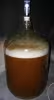
Ferment Period
Lag Period
This is a period of 2 to 3 hours where the yeast is multiplying through out the liquid. Reproduction stops at 50 million cells per milliliter. Any remaining oxygen in the mix will be carried away by the CO2 bubbles. Any oxygen introduced after fermentation begins will oxidize and leave a stale taste in the mix -- a ruined batch.
Fermenting Process
Cool the liquid to 86F (30C) a little more than room temperature. Use your temperature gun. The best temperature is stated on the yeast package which is usually 65F to 70F.
Ferment the mash at a constant 77F (25C). One of the by products of fermenting is an abundance of CO2. This gas is released by your airlock. When the airlock stops bubbling the fermentation is over and the yeast has not died, but gone into a dormant state. This can be from one week (average time) to two weeks depending on the yeast and the temperature.
The carbon-dioxide is heavier than oxygen and will cover the top of the liquid should there be a leak so the ferment will go on without unwanted bacteria getting in.
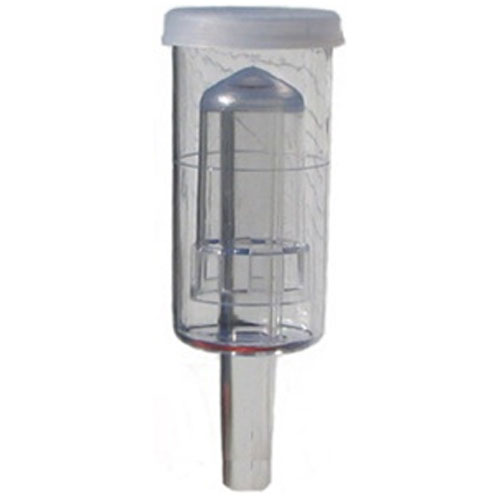 Air Lock
Note: If you bubbler isn’t bubbling then you probably have a leak of the lid. Carbon dioxide is given off by the yeast and is heavier than oxygen so it will protect the mash from any oxygen if there is a small leak.
Anti-Foaming Agents
Anti-Foaming Agents break up the bubbles that lodge at the surface. Fruits, grains, and molasses create big amount of foam and can outgrow the fermenting chamber if there is not enough head room.
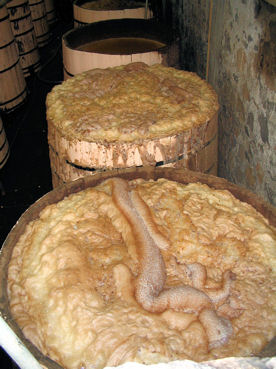
Fermenting in Mexico 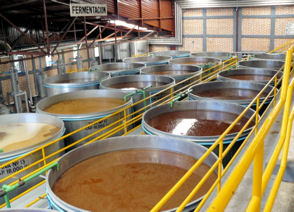
Stirring the Mash or Wash
Stirring the liquid once or twice with a sterilized stainless steel paddle will speed up the fermentation process insuring the yeast has access to all sugars.
Iodine Test
Take tincture iodine and put a drop on a spoon full of the mash liquid. It should dissipate and almost disappear. If the drop turns to a black dot, then there are unfermented sugars.