Fermenting Finished
At this point the top of the fermented mash looks like a wart and hence the finished fermented liquid was called wart.
The air lock has stopped bubbling.
The yeast sediment collects on the bottom. Siphon off the liquid in the ferment container carefully leaving the yeast sediment undisturbed on the bottom. That bottom thick layer is yeast (not dead but dormant). This slime like layer is to be thrown out.
The yeast sediment when it stops producing alcohol turns heavy and falls to the bottom. Many People referencing this yeast on the bottom represent that the yeast has died. That bottom thick layer of yeast contains both dead and dormant yeast cells. The dead cells have propagated their limit of daughter cells. The dormant yeast cells have stopped because there is now a low ratio of water because of the now present alcohol. They are waiting for more water or the cells have run out of sugars to eat. .. Or the temperature has gone below 65F deg. or above 95F deg.
CO2 Bubbles
There will be micro bubbles of CO2 still present in the present state of the mixture. Gently shake the contents to help them CO2 to escape just like you would getting bubbles out of a coke.
Siphoning
Do not pour out the finished liquid. Use a special tip at the end of your siphoning hose that will distance the end of the hose from the yeast. Make sure to not disturb the yeast at the bottom. Leave some liquid on top of the yeast to make sure no yeast is sucked out during the siphon process. Use water if needed to prime the siphon hose.
Potential Alcohol - Test for Specific Gravity
A specific gravity test will determine the maximum ABV you will get after distilling. Don't use an acrylic test cylinder as the alcohol will deteriorate the plastic and plastic particles will enter your mix. Be sure and adjust your reading based on the temperature of the liquid. Hydrometers and Alcohol meters are calibrated at 60 F. Subtract 1% ABV for every 5 F above and add 1% for every 5 F below calibrated temperature of the hydrometer.
How Long does it Take?
If there are little sugars for the yeast to eat the fermentation will be quick. If the mash is loaded with sugars, then the fermentation will take a long time. Fermentation can be somewhere from one week (average time) to two weeks depending on the type of yeast, the batch temperature, the amount of starches to break down.
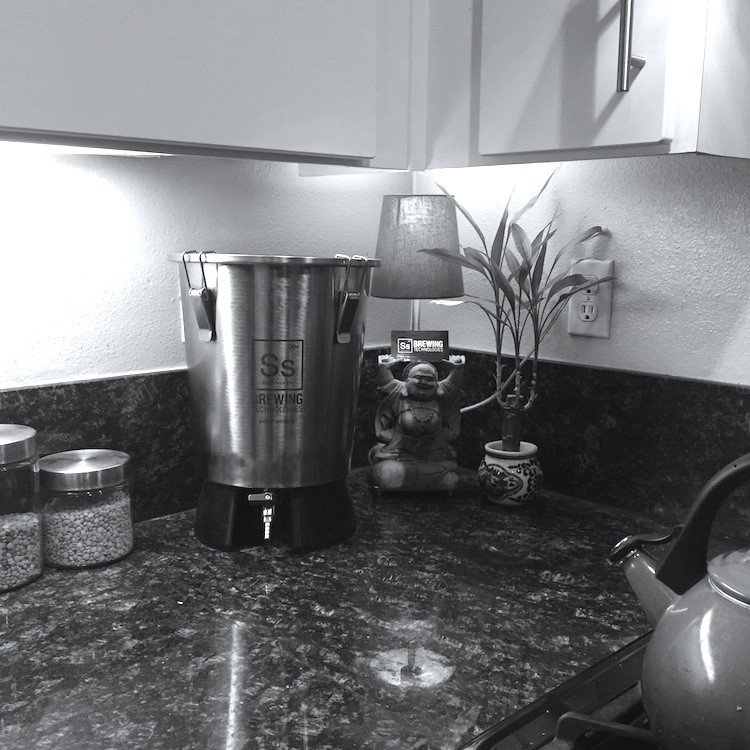 A 3 Gallon Fermenter